Trenchless Sewer Repair With Limited Excavation
Trenchless sewer repair provides an alternative to excavating a continuous trench across a yard, driveway, parking area, landscaping, or sidewalk. Depending on the pipe’s condition and property layout, participating plumbing professionals may use specialized methods to rehabilitate or replace damaged sewer lines through limited access points.
Get A Plumber Now helps homeowners, businesses, landlords, and property managers request assistance from participating plumbing professionals who may provide trenchless sewer inspections, repairs, and replacements. Before recommending a method, the plumbing professional should evaluate the pipe material, condition, alignment, depth, diameter, connections, accessibility, and surrounding property.
Service availability, inspection methods, licensing, insurance, permits, pricing, warranties, scheduling, and repair recommendations are determined by the plumbing professional serving your area.
What Is Trenchless Sewer Repair?
Trenchless sewer repair refers to several methods used to repair, rehabilitate, or replace underground sewer pipes without excavating the entire pipe route. The process generally uses one or more access points rather than a continuous open trench.
Common trenchless sewer methods include:
- Cured-in-place pipe lining
- Sewer pipe relining
- Pipe bursting
- Sectional or localized lining where available
- Other specialized pipe-rehabilitation methods
The appropriate method depends on the extent of the damage and whether the existing pipe can support a liner or provide a suitable route for replacement.
Cured-in-Place Pipe Lining
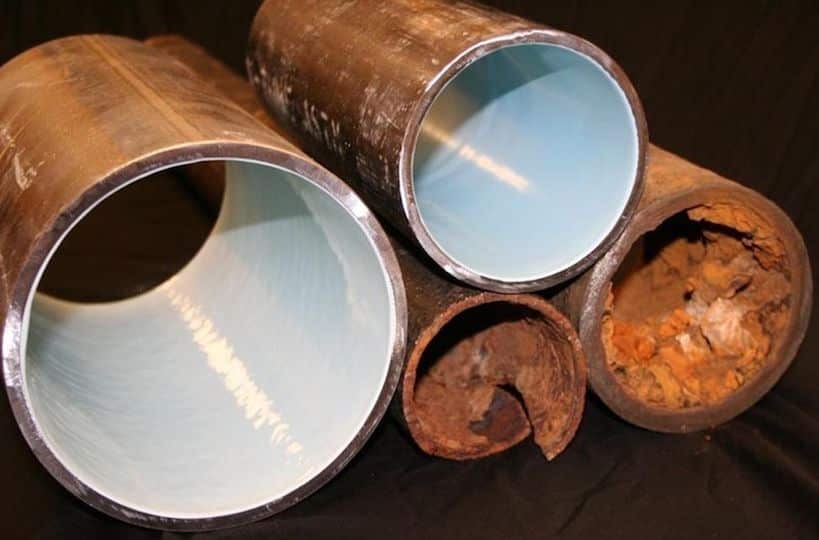
Cured-in-place pipe lining, commonly called CIPP lining, is a trenchless rehabilitation method that creates a fitted liner inside a qualifying existing pipe.
The general process may include cleaning the sewer line, preparing a resin-saturated liner, positioning it inside the existing pipe, and curing the material so it forms a new interior surface. Service connections may then need to be reopened and inspected.
Sewer pipe lining may be considered for certain pipes affected by:
- Cracks and small openings
- Corrosion or deterioration
- Leaking joints
- Accessible root intrusion
- Recurring infiltration
- Other qualifying structural conditions
Pipe lining may not be appropriate when the sewer line is fully collapsed, severely misaligned, improperly graded, substantially reduced in diameter, or otherwise unable to support the liner.
Pipe Bursting
Pipe bursting is a trenchless replacement method that breaks apart an existing pipe while pulling a new replacement pipe along the same route.
Entry and exit points are generally required, but excavating the entire pipe route may not be necessary. Pipe bursting may be considered when an existing sewer line is too deteriorated for lining but remains suitable for replacement along its established path.
Whether pipe bursting is appropriate depends on pipe alignment, soil conditions, nearby utilities, existing connections, access, depth, diameter, and other property-specific considerations.
How the Trenchless Sewer Repair Process Works
1. Review of the Sewer Problem
The plumbing professional reviews the property’s symptoms, including backups, slow drains, sewer odors, previous repairs, root problems, or known pipe damage.
2. Sewer Camera Inspection
A sewer camera inspection may be used to examine accessible portions of the pipe and identify visible cracks, roots, corrosion, separation, offsets, low sections, or collapse.
3. Pipe Cleaning and Preparation
The existing sewer line may require mechanical cleaning, root removal, pipe descaling, or hydro jetting before its condition can be fully evaluated or a trenchless system can be installed.
4. Pipe and Property Evaluation
The plumbing professional evaluates pipe material, length, depth, diameter, alignment, connections, access, soil, nearby utilities, and surface conditions.
5. Repair or Replacement Recommendation
Based on the inspection, the plumbing professional can explain whether CIPP lining, pipe bursting, localized repair, traditional excavation, or another solution should be considered.
6. Estimate and Project Approval
Before authorizing work, review the proposed method, materials, pricing, access points, permits, service connections, restoration responsibilities, exclusions, warranty terms, and estimated project timeline.
7. Installation and Final Inspection
The approved liner or replacement pipe is installed. A final inspection or testing may be performed to evaluate the installation, connections, alignment, and wastewater flow.
Potential Benefits of Trenchless Sewer Repair
When the sewer line and property qualify, trenchless repair may provide:
- Less excavation: Limited access points may replace the need for a continuous open trench.
- Reduced surface disruption: Landscaping, driveways, sidewalks, patios, flooring, and parking areas may experience less disturbance.
- Reduced restoration work: Less excavation may reduce certain landscaping, concrete, paving, or flooring restoration expenses.
- Potentially shorter installation: Some qualifying trenchless projects may be completed faster than traditional excavation.
- Durable materials: Modern lining and replacement materials are designed for underground sewer applications.
- Residential and commercial applications: Trenchless methods may be available for qualifying homes, rental properties, businesses, and managed buildings.
These are potential benefits—not guarantees. Actual excavation, project length, cost, service life, and restoration requirements depend on the selected method and property conditions.
When Trenchless Sewer Repair May Be Appropriate
A plumbing professional may consider a trenchless method when the sewer line has:
- Cracks or leaking joints
- Corrosion and material deterioration
- Recurring accessible root intrusion
- Damage beneath landscaping, concrete, or paved areas
- Repeated backups caused by structural pipe problems
- A condition unsuitable for another localized repair
- An existing route that may support trenchless rehabilitation or replacement
A camera inspection alone may not provide every measurement or condition needed to select a method. Additional locating, cleaning, testing, excavation, or engineering evaluation may sometimes be required.
When Traditional Sewer Replacement May Be Needed
Traditional excavation may be recommended when the sewer line has:
- Complete or extensive collapse
- Severe misalignment or displaced sections
- Improper slope or grading
- Multiple low or bellied sections
- Obstructions that cannot be removed
- Inaccessible or incompatible service connections
- Utility conflicts preventing trenchless equipment access
- A route that must be changed
- Conditions that prevent proper liner installation
The plumbing professional should explain why the recommended repair method is appropriate and whether reasonable alternatives are available.
Trenchless Versus Traditional Sewer Repair
Trenchless Sewer Repair
Trenchless methods usually require limited access points and may reduce excavation along the pipe route. The existing pipe or route must meet the requirements of the selected lining or replacement system.
Traditional Excavation
Traditional replacement exposes the damaged sewer line through excavation. It may cause more surface disruption but provides direct access and may be necessary for severely collapsed, misaligned, improperly graded, or inaccessible pipes.
Neither method is automatically the best choice for every property. Compare the complete proposed scope, including inspection, cleaning, excavation, materials, permits, connections, restoration, warranties, and long-term suitability.
Residential Trenchless Sewer Repair
Residential trenchless methods may help address qualifying sewer-line damage beneath yards, driveways, patios, sidewalks, landscaping, or portions of a home. Property access, pipe routing, municipal connections, nearby utilities, and local permit requirements can affect the available options.
Homeowners should ask whether the estimate includes:
- Camera inspection and pipe locating
- Cleaning and pipe preparation
- Entry and exit access points
- Reopening service connections
- Permit and inspection fees
- Final camera inspection
- Concrete, landscaping, or pavement restoration
- Material and workmanship warranties
Commercial Trenchless Sewer Repair
Trenchless methods may be considered for qualifying apartment buildings, offices, restaurants, retail properties, warehouses, hospitality properties, and other commercial facilities.
Commercial projects may require coordination with tenants, customers, facility personnel, utility providers, municipalities, and other contractors. Work schedules, access restrictions, wastewater interruptions, safety procedures, and business operations should be discussed before service begins.
What Affects Trenchless Sewer Repair Pricing?
Pricing may vary based on:
- Selected trenchless method
- Pipe length, depth, and diameter
- Existing pipe material and condition
- Extent and location of the damage
- Cleaning and preparation requirements
- Property access and equipment placement
- Number of connections or branch lines
- Entry-point and exit-point requirements
- Soil conditions and nearby utilities
- Permit and inspection requirements
- Surface restoration included in the project
- Residential or commercial property requirements
An inspection is generally required before a plumbing professional can determine whether trenchless repair is appropriate and provide project-specific pricing.
Why Request Trenchless Sewer Assistance Through Get A Plumber Now?
- Request assistance from participating plumbing professionals
- Submit residential or commercial sewer needs
- Request information about camera inspection and pipe locating
- Discuss trenchless and traditional repair methods
- Request a project-specific inspection and estimate
- Review availability in participating service areas
Get A Plumber Now is a plumbing connection service. The plumbing professional responding to your request is responsible for inspecting the sewer system, selecting appropriate methods and materials, confirming licensing and insurance, providing pricing, obtaining applicable permits, explaining warranty terms, and completing any authorized work.
Straight answers
Frequently asked questions
About Trenchless Sewer Repair
- Can every sewer line be repaired without digging?No. Trenchless methods normally require access points, and some pipes require traditional excavation. Eligibility depends on pipe condition, alignment, slope, access, connections, soil, utilities, and other property conditions.
- What is the difference between pipe lining and pipe bursting?Pipe lining creates a fitted liner inside a qualifying existing pipe. Pipe bursting breaks apart the existing pipe while pulling a replacement pipe along the same route. The plumbing professional should recommend a method based on inspection findings.
- How long does trenchless sewer repair take?The timeline depends on pipe length, preparation, access, permits, connections, selected method, curing requirements, inspection, and restoration. The plumbing professional should provide an estimated schedule after evaluating the project.
- Is trenchless sewer repair less expensive?Trenchless work may reduce some excavation and surface-restoration costs, but specialized materials and equipment can affect pricing. Compare complete written estimates rather than assuming one method will cost less.
- Can trenchless repair fix a collapsed pipe?Some damaged pipes may qualify for pipe bursting, but a fully collapsed or severely misaligned line may require excavation. Inspection and locating are needed before determining the appropriate method.
- Does the sewer line need to be cleaned first?Many lining projects require thorough cleaning and preparation. Cleaning may also be necessary before the plumbing professional can properly inspect the existing pipe.
- Will trenchless repair damage my yard or driveway?Access points and some excavation are normally required. Trenchless methods may reduce surface disruption, but the amount depends on pipe access, equipment placement, connections, and property conditions.
- Are permits required for trenchless sewer repair?Permit and inspection requirements vary by jurisdiction and project type. Confirm who will obtain permits, schedule inspections, and pay applicable fees before authorizing the work.
- How long does a trenchless sewer liner last?Expected service life depends on the product, installation, pipe conditions, wastewater exposure, maintenance, and manufacturer specifications. Ask the plumbing professional for written product and warranty information.
Request Trenchless Sewer Repair Assistance
If your property has recurring sewer backups, root intrusion, damaged underground pipes, or a sewer line that may require rehabilitation or replacement, provide information about the problem, property type, location, previous repairs, and urgency. Get A Plumber Now will help connect you with a participating plumbing professional who can discuss inspection and repair availability.
-

-
Request Trenchless Sewer Repair
Click the button below to request assistance. Get A Plumber Now will help connect you with a participating plumbing professional who can review the sewer problem, discuss inspection and trenchless options, and provide project-specific pricing. Response times and scheduling vary by location, urgency, project requirements, and participating professional availability.
Request Trenchless Sewer Assistance
Provide a few details about your sewer-line problem.