Professional Residential and Commercial Drain Cleaning
Clogged drains can interrupt normal property use and may contribute to overflowing fixtures, wastewater backups, unpleasant odors, and water damage. Whether you have a slow kitchen sink, clogged shower, backed-up toilet, blocked floor drain, or recurring main sewer problem, professional drain cleaning can help identify and remove qualifying obstructions.
Get A Plumber Now helps homeowners, businesses, landlords, and property managers request assistance from participating plumbing professionals who may provide drain cleaning, sewer cleaning, hydro jetting, drain snaking, pipe descaling, and camera inspections.
Service availability, inspection methods, equipment, licensing, insurance, pricing, scheduling, warranties, and cleaning recommendations are determined by the plumbing professional serving your area.
Signs You May Have a Clogged Drain
Slow-Draining Fixtures
Water that drains slowly from sinks, tubs, showers, or floor drains may indicate developing buildup or a partial obstruction inside the plumbing system.
Gurgling or Bubbling Sounds
Unusual noises from drains or toilets may indicate restricted wastewater flow, trapped air, a blockage, or a venting problem.
Unpleasant Drain Odors
Grease, food particles, soap residue, waste, or other material may collect inside pipes and contribute to persistent odors. Sewer odors may also indicate dry traps, venting problems, pipe damage, or other conditions.
Water Backing Up
Water or wastewater backing up into sinks, tubs, showers, toilets, or floor drains may indicate a significant drain or sewer-line obstruction.
Several Clogged Fixtures
A problem affecting several fixtures at the same time may involve a branch drain, main building drain, or sewer line rather than a single fixture.
Recurring Drain Problems
A drain that repeatedly becomes clogged after cleaning may be affected by grease, roots, heavy scale, pipe damage, improper slope, a low section, or another unresolved condition.
Common Causes of Clogged Drains
Drain and sewer obstructions may be caused by:
- Grease and cooking oils
- Food waste
- Hair and soap residue
- Paper products and wipes
- Foreign objects
- Mineral deposits and scale
- Rust and corrosion
- Tree-root intrusion
- Sand, soil, sediment, or construction debris
- Damaged, collapsed, or misaligned pipes
- Improper drain slope or low pipe sections
The appropriate cleaning or repair method depends on the obstruction, its location, pipe material, pipe condition, accessibility, and the plumbing system involved.
Professional Drain-Cleaning Methods
Drain Snaking and Mechanical Cleaning
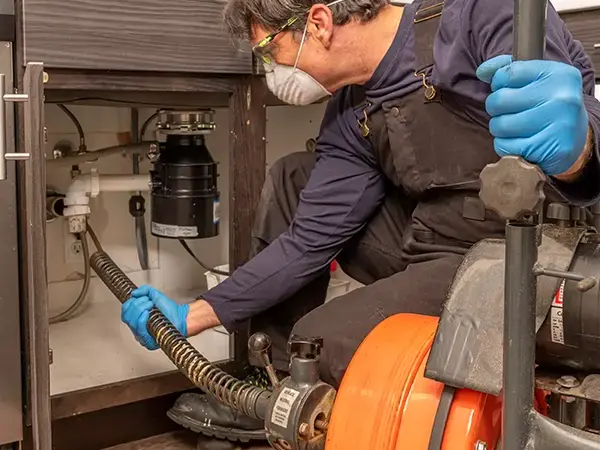
A plumbing snake, cable machine, or drain auger may be used to break through or retrieve localized clogs caused by hair, soap buildup, paper, food material, or certain foreign objects.
Mechanical cleaning may reopen a blocked drain without cleaning all buildup from the surrounding pipe walls. The plumbing professional should select the appropriate cable and attachment for the pipe and obstruction.
Hydro Jetting
Hydro jetting uses controlled high-pressure water to remove qualifying grease, sludge, scale, debris, and certain root intrusions from accessible drain and sewer pipes.
Hydro jetting is not appropriate for every pipe. Fragile, collapsed, separated, severely corroded, or structurally deteriorated pipes should be evaluated before high-pressure equipment is used.
Pipe Descaling
Pipe descaling may use specialized mechanical equipment to remove hardened rust, corrosion, and mineral buildup from qualifying pipes, including certain older cast iron drain and sewer lines.
Root Removal
Specialized cutting or cleaning equipment may remove accessible roots from inside a sewer pipe. Root removal does not repair the crack, failed joint, or opening that allowed the roots to enter.
Sewer Camera Inspection
A sewer camera inspection may help identify visible blockages, roots, cracks, corrosion, pipe separation, low sections, or collapse. Severe obstructions may need to be opened before a camera can travel through the pipe.
How Professional Drain Cleaning Works
1. Review of the Drain Problem
The plumbing professional reviews which fixtures are affected, when the problem began, previous cleaning attempts, backup history, property type, and available access.
2. Initial Plumbing Inspection
Accessible fixtures, drains, cleanouts, and other plumbing components may be inspected to help identify the affected section.
3. Selection of a Cleaning Method
The plumbing professional selects drain-snaking equipment, hydro jetting, descaling tools, root-cutting equipment, or another method based on the obstruction and pipe condition.
4. Drain or Sewer Cleaning
The selected equipment is used to remove or break apart accessible material and restore wastewater flow where possible.
5. Testing and Additional Inspection
The plumbing professional may test the drain or use camera equipment to evaluate visible pipe conditions and determine whether additional cleaning or repair is recommended.
Kitchen Drain Cleaning
Kitchen drains may become restricted by grease, cooking oils, food debris, soap residue, and other material. Over time, this buildup can narrow the pipe and trap additional waste.
A plumbing professional can evaluate whether mechanical cleaning, hydro jetting, or another method is appropriate. Avoid pouring grease or cooking oil down the drain, even when followed by hot water.
Bathroom Drain Cleaning
Bathroom sinks, showers, and tubs commonly collect hair, soap residue, personal-care products, and mineral deposits. Toilets may become obstructed by excess paper, wipes, foreign objects, or problems farther inside the drain system.
If several bathroom fixtures are affected, the blockage may be located in a shared branch drain or main sewer line.
Floor and Laundry Drain Cleaning
Floor drains and laundry lines may collect lint, dirt, soap, sediment, debris, or other material. A plumbing professional can inspect the affected drain and determine whether cleaning, trap service, pipe repair, or another solution is appropriate.
Main Sewer Line Cleaning
A blocked main sewer line may cause wastewater to back up through low fixtures such as tubs, showers, toilets, or floor drains. Common causes include roots, grease, scale, waste, pipe damage, and foreign objects.
Depending on the findings, the plumbing professional may recommend mechanical sewer cleaning, hydro jetting, camera inspection, pipe descaling, or additional repair.
If an inspection identifies structural damage, possible next steps may include:
- Localized sewer repair
- Sewer pipe lining
- Pipe bursting
- Trenchless sewer repair
- Sewer line repair or replacement
Residential Drain Cleaning
Participating plumbing professionals may provide drain-cleaning services for:
- Kitchen sinks
- Bathroom sinks
- Showers and bathtubs
- Toilets
- Laundry drains
- Floor drains
- Garage and utility drains
- Branch drain lines
- Main building drains
- Residential sewer lines
The plumbing professional should evaluate whether the problem is limited to one fixture or affects a larger portion of the plumbing system.
Commercial Drain Cleaning
Restaurants, apartment buildings, hotels, offices, retail properties, schools, warehouses, healthcare facilities, and other commercial buildings may experience frequent drain problems because of heavy daily use.
Commercial cleaning may be requested for:
- Commercial kitchen drains
- Grease-affected drain lines
- Restroom sinks and toilets
- Floor drains
- Shared building drains
- Main sewer lines
- Recurring clogs in managed properties
Commercial service may require coordination with tenants, facility managers, kitchen staff, business operators, or other contractors. Access, operating hours, wastewater interruptions, and cleanup responsibilities should be discussed before service begins.
Emergency Drain and Sewer Backups
An urgent blockage may involve wastewater overflowing from fixtures, several unusable drains, a backed-up main sewer line, or water threatening to damage the property.
When wastewater is present:
- Stop using affected plumbing fixtures
- Keep people and pets away from contaminated water
- Avoid contact with electrical equipment near standing water
- Restrict access to the affected area
- Request professional assistance
Submitting a request does not guarantee immediate or 24-hour service. Availability depends on the location, time, urgency, service requirements, and participating plumbing professionals.
Preventive Drain Maintenance
Some residential and commercial properties may benefit from scheduled drain or sewer maintenance when recurring buildup is present. Maintenance recommendations should be based on system usage, pipe condition, inspection findings, and previous problems.
Steps that may help reduce certain clogs include:
- Keep grease and cooking oil out of drains
- Avoid flushing wipes and other unsuitable materials
- Use appropriate strainers in sinks, tubs, and showers
- Address slow drains before a complete blockage develops
- Repair recurring root-entry points and damaged pipes
- Follow commercial grease-management procedures
- Schedule inspections when problems repeatedly return
No maintenance program can prevent every clog or plumbing failure.
Avoid Unsafe Drain-Cleaning Methods
Repeated use of chemical drain cleaners may damage certain pipes, create hazardous conditions, and complicate professional service. Never mix drain-cleaning products or combine chemicals with bleach, acids, or other cleaners.
Stop using a fixture when water is overflowing, wastewater is backing up, a foreign object is lodged in the drain, or previous attempts have not corrected the problem.
What Affects Drain-Cleaning Pricing?
Drain-cleaning pricing may depend on:
- Location and type of blockage
- Number of affected fixtures
- Pipe length, diameter, material, and condition
- Available cleanouts and access points
- Cleaning equipment and method required
- Severity and type of buildup
- Camera-inspection requirements
- Residential or commercial property conditions
- Emergency or after-hours service
- Additional repairs identified during inspection
Before authorizing service, ask what the quoted price includes and whether camera inspection, hydro jetting, descaling, equipment charges, cleanup, or repairs are priced separately.
Why Request Drain Cleaning Through Get A Plumber Now?
- Request assistance from participating plumbing professionals
- Submit residential or commercial drain problems
- Describe slow drains, clogs, odors, or backups
- Request information about available cleaning methods
- Discuss camera-inspection availability
- Request project-specific pricing
Get A Plumber Now is a plumbing connection service. The plumbing professional responding to your request is responsible for diagnosing the problem, selecting appropriate equipment, confirming licensing and insurance, providing pricing, explaining limitations and warranties, and completing any authorized work.
Straight answers
Frequently asked questions
About Drain Cleaning
- What is the best method for clearing a clogged drain?The appropriate method depends on the clog, location, pipe material, condition, and accessibility. A plumbing professional may recommend mechanical cleaning, hydro jetting, descaling, or another method.
- What is the difference between drain snaking and hydro jetting?Drain snaking uses a cable or auger to break through or retrieve certain obstructions. Hydro jetting uses controlled high-pressure water to remove qualifying buildup from accessible pipe walls.
- Can drain cleaning remove tree roots?Specialized equipment may remove accessible roots from inside a sewer pipe. It does not repair the crack or failed joint that allowed the roots to enter.
- Should I request a sewer camera inspection?A camera inspection may be helpful for recurring clogs, backups, suspected roots, older pipes, or problems that continue after cleaning. Severe blockages may need to be opened before camera inspection.
- Why does my drain keep clogging?Recurring clogs may be caused by grease, hair, roots, scale, foreign objects, damaged pipes, improper slope, low sections, or incomplete removal of previous buildup.
- Can chemical drain cleaners damage pipes?Some chemical products may damage certain plumbing materials or create hazardous conditions. Never mix drain-cleaning chemicals. Follow product instructions and consult a professional when the problem continues.
- How long does professional drain cleaning take?The timeline depends on the obstruction, location, access, pipe condition, cleaning method, and whether camera inspection or additional work is needed.
- Does drain cleaning include sewer repair?No. Drain cleaning removes qualifying obstructions and buildup. Structural pipe repairs should be inspected, recommended, and priced separately.
- Can I request both residential and commercial drain cleaning?Yes. Requests may be submitted for homes, apartments, restaurants, offices, retail properties, warehouses, and other buildings. Availability varies.
- Will drain cleaning prevent future clogs?Professional cleaning may remove existing buildup, but it cannot guarantee that clogs will not return. Usage, roots, pipe damage, foreign objects, and new accumulation can cause future problems.
Request Professional Drain-Cleaning Assistance
If your property has a clogged sink, backed-up toilet, slow shower, blocked floor drain, recurring sewer problem, or several affected fixtures, provide information about the problem, property type, location, and urgency. Get A Plumber Now will help connect you with a participating plumbing professional who can discuss cleaning and inspection availability.
-

-
Request Professional Drain Cleaning
Click the button below to request assistance. Get A Plumber Now will help connect you with a participating plumbing professional who can review the drain problem, discuss cleaning and inspection options, and provide project-specific pricing. Response times and scheduling vary by location, urgency, service requirements, and participating professional availability.
Request Drain-Cleaning Assistance
Provide a few details about your clogged drain or sewer problem.